
Why early integrated breadboard testing can reveal system interactions before the design is finalized
Teams often look forward to the point when the pieces finally start coming together.
The optics are installed. The electronics are communicating. The software is running. Motion systems are moving. Assemblies that have been developed and tested independently are finally operating as a complete product.
It’s where the product begins to feel real. It’s also where teams often learn which assumptions were correct—and which weren’t.
When unexpected behavior appears during integration, it’s natural to focus on what’s happening in the moment. But over the years, we’ve found that many integration challenges have roots much earlier in development.
Often, integration is simply the point where those interactions become visible. The goal is to discover them much earlier, while there’s still time to make changes.
No subsystem operates in isolation
It’s not unusual to see a project where every subsystem appears to be working properly on its own. The mechanical design meets its requirements. The electronics function as expected. The software passes testing. The optics produce the desired results.
Yet once everything comes together, the overall system behaves differently than anticipated. The challenge is that once the full system comes together, no subsystem is really operating on its own anymore.
In life science instrumentation, we’ve seen a mechanical decision affect optical performance, a thermal change influence a measurement, or a software adjustment expose an assumption made much earlier in development.
We’ve also seen systems that perform exactly as expected during short-duration testing become less repeatable over longer runs because thermal effects only become apparent once the full system is operating.
Learning early
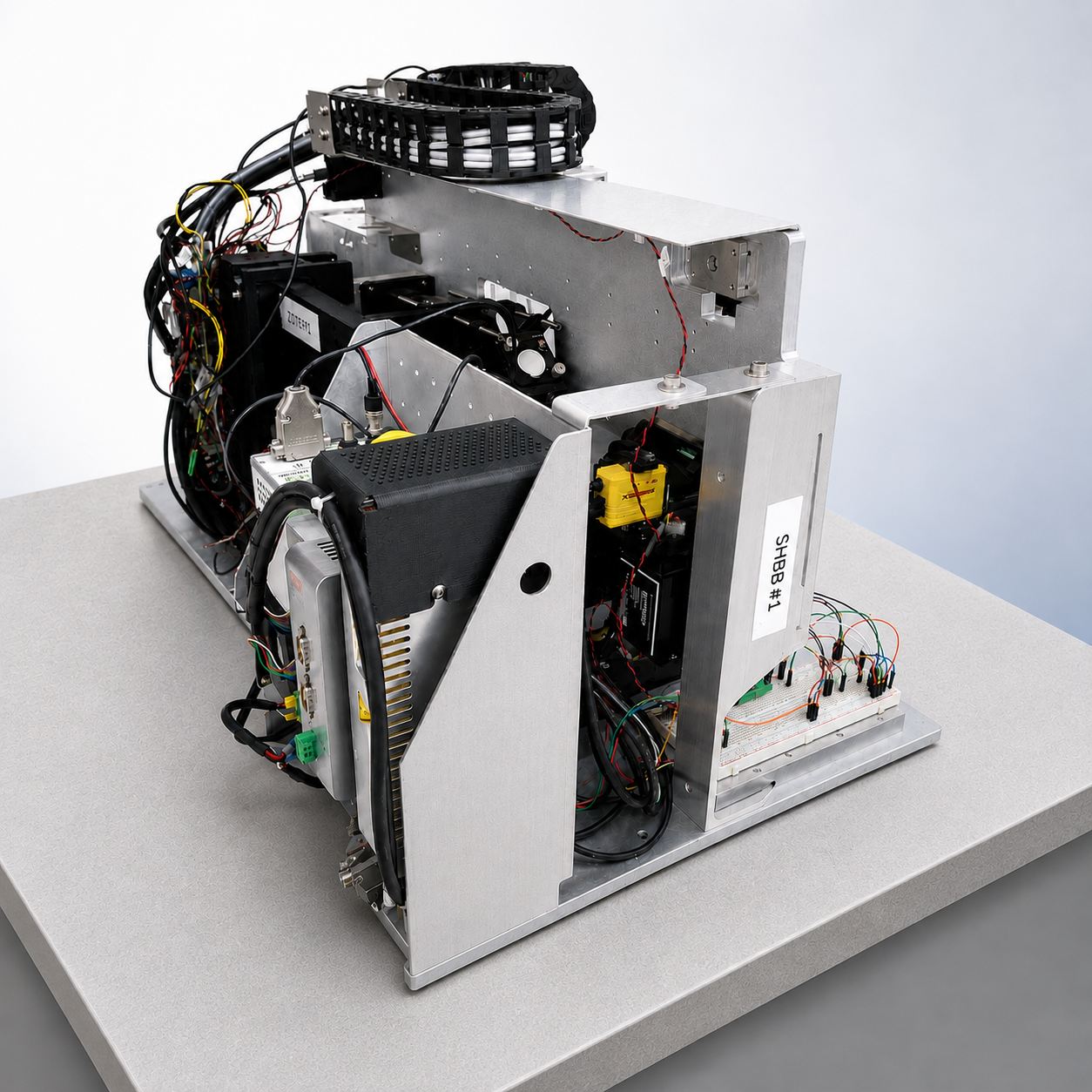
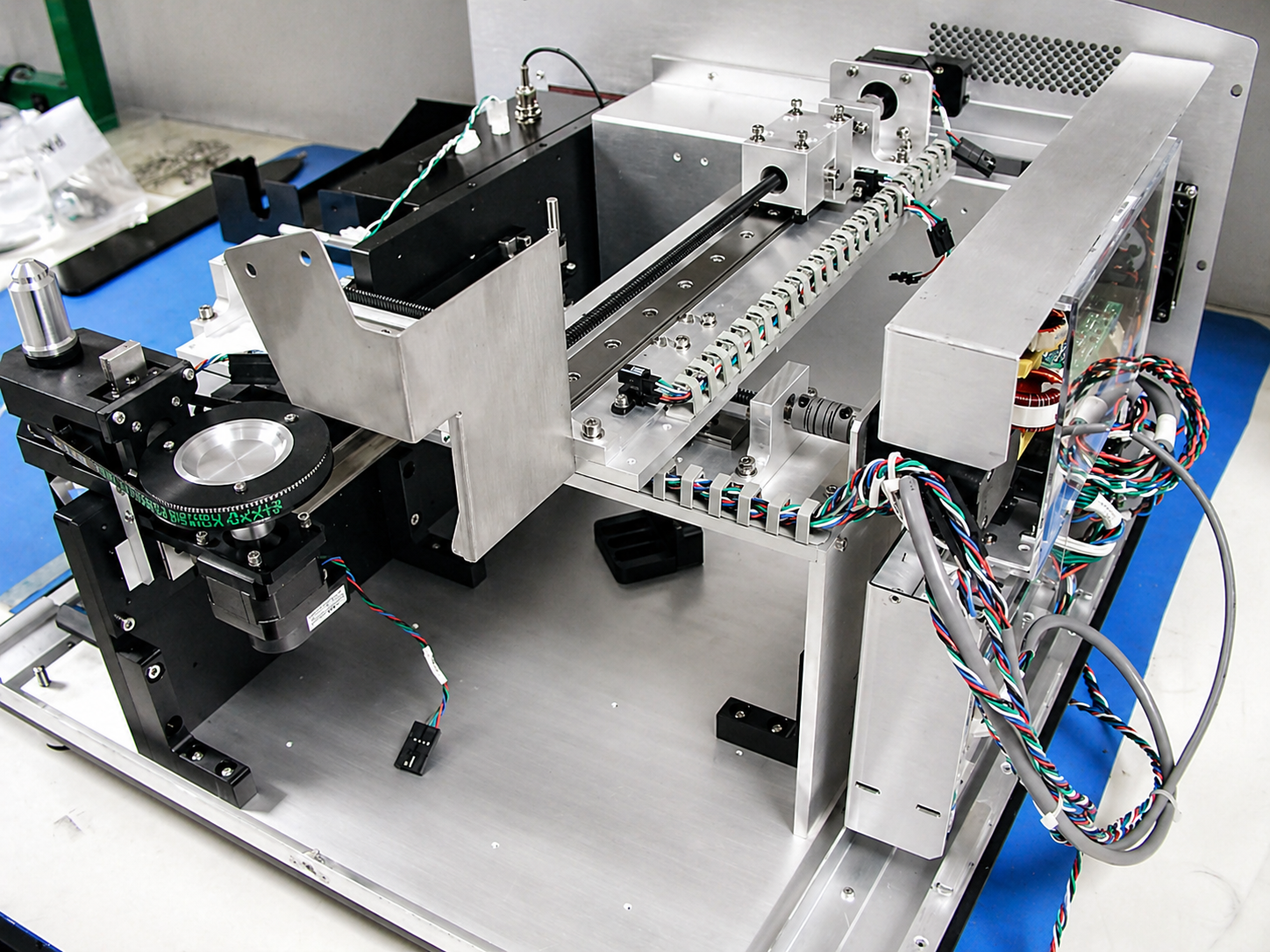
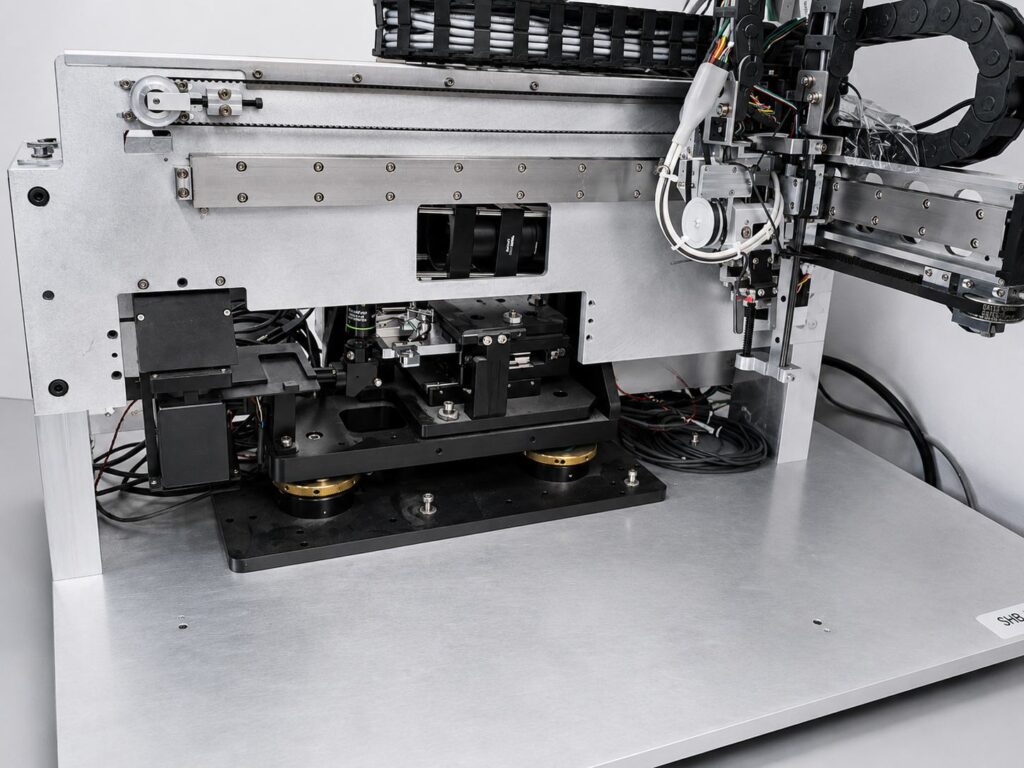
One of the most effective ways we’ve found to reduce technical risk is through early integrated breadboard testing.
The goal isn’t to prove the design works. It’s to learn what you don’t know yet.
Bringing key subsystems together early in an integrated breadboard often reveals interactions that wouldn’t otherwise become apparent until much later. They help answer important engineering questions while there is still flexibility to make changes.
On one recent project, an integrated breadboard showed that an optical component we thought we needed really wasn’t necessary. Eliminating it saved approximately $5,000 per unit and allowed us to simplify the system early in development.
The breadboard wasn’t the final design. Its purpose was to answer important engineering questions while there was still flexibility in the design. Without it, we likely would have built the prototype around an unnecessary component, making the system more complex and more expensive than it needed to be.
Looking beyond individual components
The interesting part usually isn’t the individual subsystems. It’s what happens when they begin interacting with one another. That’s often where teams learn something they didn’t know before.
Experienced product development teams look for opportunities to expose those interactions before final integration. Every important question answered early reduces uncertainty and gives the team more flexibility as the design moves forward.
A lesson we've seen repeatedly
After many years of developing complex instrumentation, one observation continues to hold true.
What appears during integration is often the result of decisions, assumptions, and interactions that have been developing quietly throughout the program. There will always be surprises in product development. The question is whether they appear when changes are still relatively easy to make.
Integrated breadboards won’t answer every question, but they help teams learn sooner. And the sooner you learn, the easier it is to simplify the design, avoid unnecessary cost, and make better decisions.
The earlier you learn, the more options you have.
Lathrop Product Development
Integration early. Reliable performance.